Upon arrival at Calama Airport, you’ll be met by your guide and transferred to the oasis village of San Pedro de Atacama - your base for the next five nights. Nestled between desert and volcano, this charming town offers a peaceful start to your adventure, with a selection of four comfortable hotels to choose from.
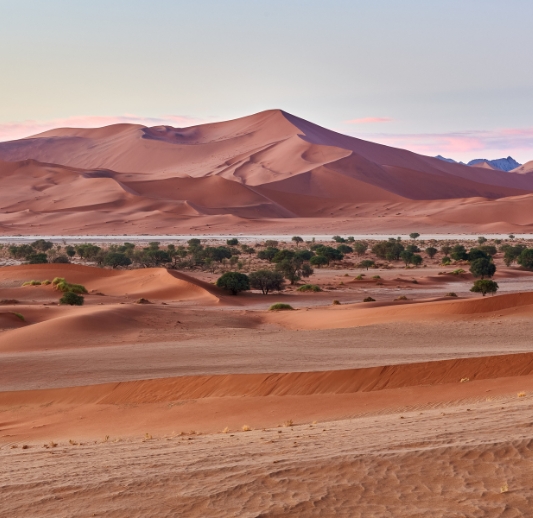
That afternoon, we’ll head straight into the surreal beauty of Valle de la Luna (Valley of the Moon), a barren yet breathtaking landscape sculpted over millions of years. Located within the Cordillera de la Sal (the Salt Range) this region was formed by tectonic forces some 23 million years ago. Here, you’ll encounter shimmering layers of salt, gypsum, borates, and clay, shaped into dramatic ridges, valleys, and escarpments. The textures and tones of the terrain are a photographer’s dream: vast dry lakes, delicate dunes, and multicolored formations that shift with the light. We’ll visit iconic features such as Las Tres MarÃas (The Three Maries) and the Anfiteatro (Amphitheatre), pausing to explore and photograph their intricate details.
As the day closes, we’ll position ourselves at one of the valley’s most stunning viewpoints to witness sunset over the desert. The fading light ignites the rocks in hues of gold and crimson, with the majestic Licancabur Volcano rising in the background, a sacred symbol for the Likanantai (Atacameño) people.
Today offers a deeper dive into the Atacama’s dramatic landscapes and surprising biodiversity. At sunrise, we’ll explore ancient petroglyphs etched into rocky outcrops - traces of ancestral caravans that once crossed the desert from oasis to oasis. Along a dedicated trail, you’ll photograph dozens of zoomorphic, anthropomorphic, and abstract carvings that reveal the region’s rich cultural heritage.
From there, we head into Valle del Arcoiris (Rainbow Valley) where mineral-rich hills explode in color. We’ll spend the morning wandering through canyons and gullies, capturing the colossal folds and textures shaped by millennia of wind and water erosion. The valley’s palette of reds, greens, purples, and ochres makes it a dream for landscape photography.
In the afternoon, we visit Salar de Atacama, one of the largest salt flats in the world. Fed by geysers and snowmelt from the highlands, these vast depressions evaporate quickly, leaving behind brilliant salt crusts and vividly colored pools. The water’s hues - pink, blue, or white - are caused by saline-tolerant bacteria and diatoms, and even shrimp-like crustaceans thrive in this caustic environment. En route to the heart of the salt flat, we’ll pause at one of the last stands of the endemic Tamarugo tree, home to the rare Tamarugo Conebill. Our day ends at Laguna Chaxa, where brine shrimp attract flocks of flamingos - Andean, Chilean, and the elusive Puna. As the sun sets, the Andes glow in shades of crimson, and flamingos drift across mirrored waters, a truly exulting scene to capture.
This morning we journey south of San Pedro to explore the Lagunas Altiplánicas, two stunning high-altitude lakes nestled deep in the Andes. En route, we pass through the agricultural villages of Toconao and Socaire, where stone houses, lush orchards, and intricate irrigation systems offer a glimpse into desert farming traditions. As we climb in elevation, we arrive at the protected reserve of Lagunas Miscanti and Miñiques. Surrounded by towering volcanoes, these lakes are a haven for birdlife and offer exceptional photographic opportunities. You’ll likely spot a variety of waterbirds and songbirds, including one of the world’s few breeding populations of the rare Horned Coot, the largest and most threatened coot species globally. Herds of vicuñas often graze nearby, their silhouettes framed by the dramatic mountain backdrop. We’ll stay on designated trails to preserve the fragile ecosystem while capturing the serene beauty of these high Andean landscapes. The light, altitude, and silence combine to create a truly immersive experience.
Later, we continue south to Salar de Talar, where the day’s most breathtaking vistas await. This turquoise-colored lake, set against soft-textured volcanic slopes and mineral-rich hills, offers sweeping panoramas and subtle color contrasts that shift with the sun. It’s a place where geology and wildlife meet in perfect harmony, and where your camera will be busy from every angle.
We begin today before sunrise, heading into the high Andes to explore the El Tatio Geysers, one of the world’s highest and largest geyser fields. At 4,200 meters (13,800 ft), this surreal landscape comes alive in the early morning light. Columns of steam rise from the earth, pastel-colored mud bubbles in mineral-rich pools, and cones of crystallized salts shimmer in the cold air. It’s a dramatic and otherworldly scene, perfect for capturing the interplay of light, texture, and motion. Despite the extreme conditions, life persists here. You’ll learn about the hardy plants and animals that survive at the very edge of possibility, adapted to high altitude and geothermal heat.
Later, we descend to the Putana River, a haven for birdlife. Expect sightings of Giant and Andean Coots, Puna and Yellow-billed Teals, and other high-altitude species. We’ll also explore the unique flora of the region, including the towering Atacama Cactus (Echinopsis atacamensis), which thrives in the Guatin gorge and along the Puritama River.
Returning to San Pedro de Atacama in the afternoon, you’ll have free time to explore the town’s adobe streets, browse the local market, or visit the Father Le Paige Anthropological Museum, which offers fascinating insights into the region’s pre-Columbian cultures.
This day blends geothermal drama, wildlife encounters, and cultural discovery - an ideal mix for photographers and nature lovers alike.
Today’s journey takes us into one of the most remote and least-visited corners of the Atacama Desert - a region of dramatic geology, high-altitude wildlife, and surreal beauty. We begin early, driving east of San Pedro along the international road near the Bolivian border, catching sunrise views of Licancabur Volcano and the shimmering Laguna Blanca.
Our first stop is the Monjes de Pakana, towering stone columns known as the Pakana Monks. From here, we leave the road entirely and venture off-track toward the Salar de Tara, guided by an expert driver through desolate valleys and sculpted ridges. One of the day’s highlights is the Cathedrals of Tara, a breathtaking geological formation that rises like ancient ruins from the desert floor.
At the lake itself, we’ll photograph flocks of Andean and James’s Flamingos, alongside a rich variety of high-altitude birds including Puna Tinamou, Lesser Rhea, Golden-spotted Ground-Dove, Mountain Parakeet, and Red-backed Sierra-Finch. The bizarre Mountain Vizcacha (a large, rock-dwelling rodent) and herds of Vicuña add to the wildlife spectacle.
On our return to San Pedro, we’ll stop at Salar de Pujsa, a lesser-known salt flat where flamingos gather in large numbers to feed on the alkaline waters. The light, reflections, and birdlife here offer a final burst of photographic inspiration before we descend back to town.
On our final morning, we’ll visit the pre-Hispanic fortress of Pukará de Quitor, perched just outside San Pedro de Atacama. Built over 700 years ago during the Inca occupation, this stone complex once served as a defensive stronghold for local communities against rival tribes. Its strategic position on the hillside offers sweeping views of the valley and a fascinating glimpse into the region’s ancient history. As you explore the ruins, you’ll photograph the rugged architecture and absorb the quiet power of a place shaped by centuries of resilience and cultural heritage. It’s a fitting final chapter to a journey that’s blended geology, wildlife, and human history in one of the world’s most extraordinary landscapes.
After the visit, you’ll be transferred to Calama Airport, where the trip concludes.
Another day spent on the road, as your journey continues to the southern borders of Bolivia and you explore the Lipez region. There’s plenty of incredible viewpoints to stop at along the way and you’ll also have a chance to photograph Sol de manaña.
Then, on to the thermal springs of Polques where you can enjoy a soak in the hot pools. After, you’ll head to your accommodation for the night in Vilamar, a hotel built in a system of caves.
Early in the morning you’ll travel through the Dali Desert, of course taking ample photo stops, as you travel to the Green Lagoon at the foot of the Licancabur Volcano. Having taken in the views, and the chance to relax by the turquoise waters of the lagoon, the group will move on to the border crossing of Hito Cajon.
Having completed your journey, you’ll take lunch at your lodging in the town of San Pedro. In the afternoon you’ll visit the out of this world rock formations of the Valley of the Moon and woitness your first Chilean sunset.
On your final full day together, you’ll take breakfast to go this morning, driving to the Laguna Chaxa for a sunrise shoot. You’ll continue your exploration of the Chilean Altiplano with a tour of the highland lagoons Meniques and Miscanti, each with their own beautiful views of the volcanoes above and the atacama regions below.
Your tour of the lagoons will end with sunset photos of the mountains over the desert, then you’ll return to town for dinner. At night you’ll have a final excursion to take astrophotography of the Atacama’s dark skies and a triip to the world-famous high altitude ALMA observatory. This has to be one of the highlights of any Chile Photography tour.
The final day of your Bolivia and Chile Photography tours is here. For your final morning there will be the option to join for a sunrise photo shoot in the Cordillera de Sal. After which you’ll return to your hotel for breakfast and take your pre-arranged transfer to Calama airport for your flight home.