29 April 2026 - Destinations in Focus, Packing for a Photo Tour

What to Pack for a Photography Tour in Uganda

A practical guide to getting your kit right before you go

Uganda is not your typical African safari destination. In the space of a single trip, you’ll move between misty highland forests, open savannah plains, and dense jungle, each with its own demands on your clothing, your body, and your camera bag. Packing well makes a genuine difference here. Pack wrong and you’ll spend your gorilla trek slipping on muddy slopes in inadequate footwear, or miss a shot because your lens fogged up in the humidity. This guide covers everything you need to bring on a Uganda photography tour: camera gear, clothing, health essentials, and a few things most packing lists forget to mention.

Playful gorilla baby in Bwindi Impenetrable Forest, Uganda

Camera gear

Uganda offers some of the most varied and technically challenging wildlife photography you’ll encounter anywhere. Here’s what to think about.

Lenses
You’ll want two focal lengths. A telephoto – 100–400mm or similar – is essential for the open savannah sections in Queen Elizabeth National Park, where you’ll be photographing lions, elephants and birds from a vehicle. But in the forest, longer glass becomes a liability. Gorilla and chimp encounters happen at close range, often in low light, and a 70–200mm or even a 24–70mm will serve you better for the tight, atmospheric shots that make great primate images. If you’re travelling with one body, this is a trip where a versatile zoom lens earns its place.

Camera body
If you have a weather-sealed body, bring it. Bwindi is called the Impenetrable Forest for a reason, and the humidity and occasional rain are real. A camera that can handle the conditions will give you peace of mind on the trek.

Memory and batteries
Bring more of both than you think you need. Game drives start before sunrise and go until dark. You’ll have very limited access to power on the road, so carry at least two spare batteries and a portable charger. For memory cards, think about how many images you might take in a full day’s game drive followed by a gorilla trek, and then double it.

A good rain cover
This is important, especially if you’re traveling in the rain season. You can buy a purpose-made cover for your camera and lens, or improvise with a dry bag, but you need something. Rain in Uganda arrives without much warning, and you won’t always have time to pack your camera away before it starts.

Lens cloths and silica gel
Fog and condensation are a real issue when you move between cool highland air and warm, humid forest. Pack several lens cloths and a handful of silica gel sachets to keep in your camera bag – they make a noticeable difference.

A comfortable camera bag or harness
The gorilla trek involves several hours of hiking through dense, steep jungle. A backpack-style camera bag works better than a shoulder bag here, and a camera harness that keeps your body free while keeping the camera accessible is worth considering.

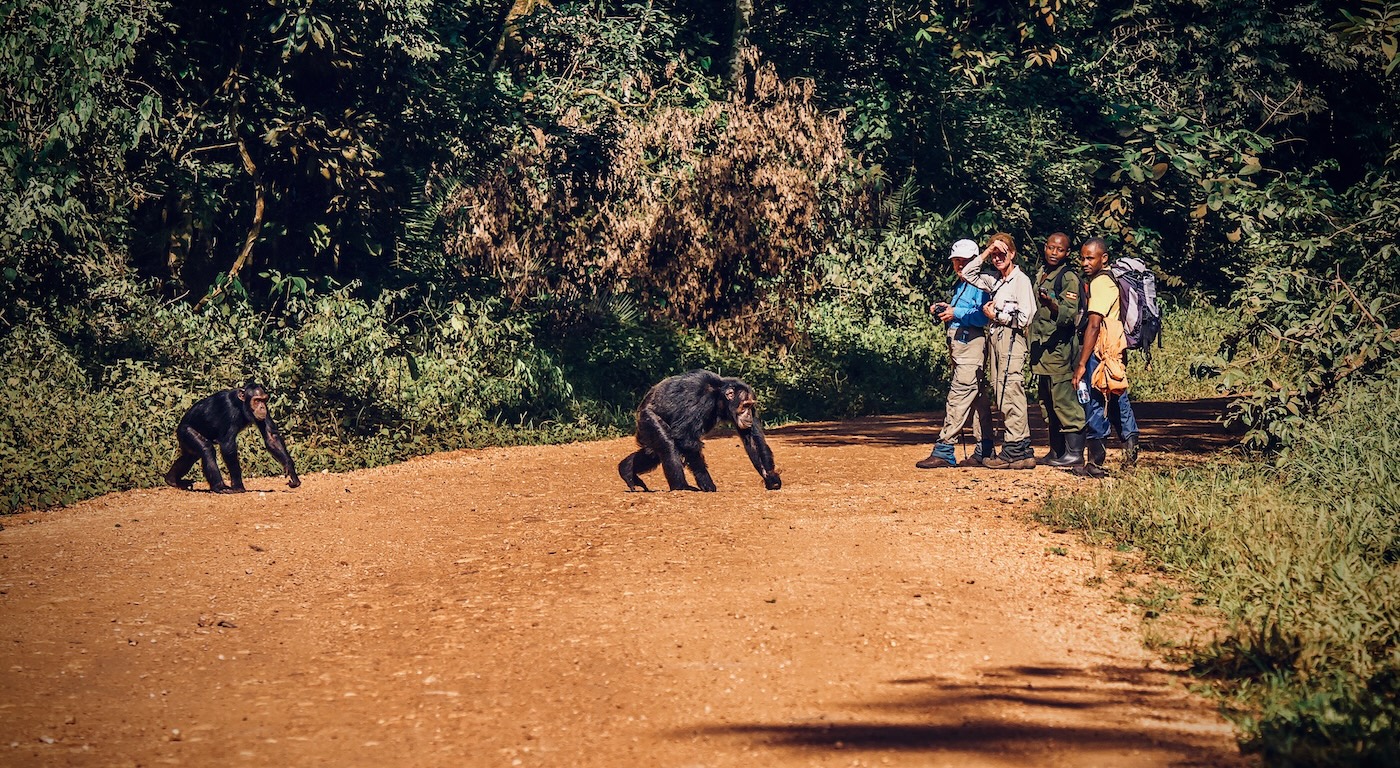
Tourists encountering chimpanzees in Kibale, Uganda

Clothing

Uganda’s terrain means your wardrobe needs to cover a wider range of conditions than a standard safari.

Neutral colours
For the forest sections, dark neutral colours (olive, dark green, brown, black) are better than khaki. In dense jungle, you want to blend into your surroundings rather than stand out, and it’s also kinder to the wildlife you’re trying to photograph. For the open plains, standard safari neutrals are fine.

Long sleeves and trousers
Essential throughout. In the forest, they protect you from insects, stinging nettles, and thorny undergrowth. On the plains, they’re practical during early morning drives when it can be surprisingly cool. Lightweight, breathable fabrics dry quickly and are worth the investment over cotton.

Waterproof jacket
A compact, packable waterproof is one of the most useful things you’ll carry. Even in the dry season, the forests are wet. Uganda’s two rainy seasons run from March to May and October to November, but you can get rain at almost any time of year in the highlands.

Warm layer
Temperatures at altitude, particularly around Bwindi, which sits at over 2,000 metres, can drop significantly in the evenings. A fleece or light down jacket is worth packing, especially if your trip runs into the shoulder seasons.

Hiking boots
Good ones. The gorilla trek is not a gentle forest stroll – it’s a serious hike over steep, muddy, rooty terrain that can last anywhere from one to six hours depending on where the gorillas have decided to spend the day. Worn-in, ankle-supporting, waterproof hiking boots will make a significant difference to your experience. Do not attempt this in trail runners unless they’re very robust and you’re an experienced hiker.

Gaiters
Underrated and under-packed. Gaiters keep mud and debris out of your boots on the forest sections, and they’re lightweight enough that there’s no good reason to leave them behind.

Lightweight gloves
Not for warmth, but for the forest. The undergrowth in Bwindi is dense and thorny in places, and a light pair of garden-style gloves is useful when you need to grab a branch or negotiate a particularly spiky section of trail.


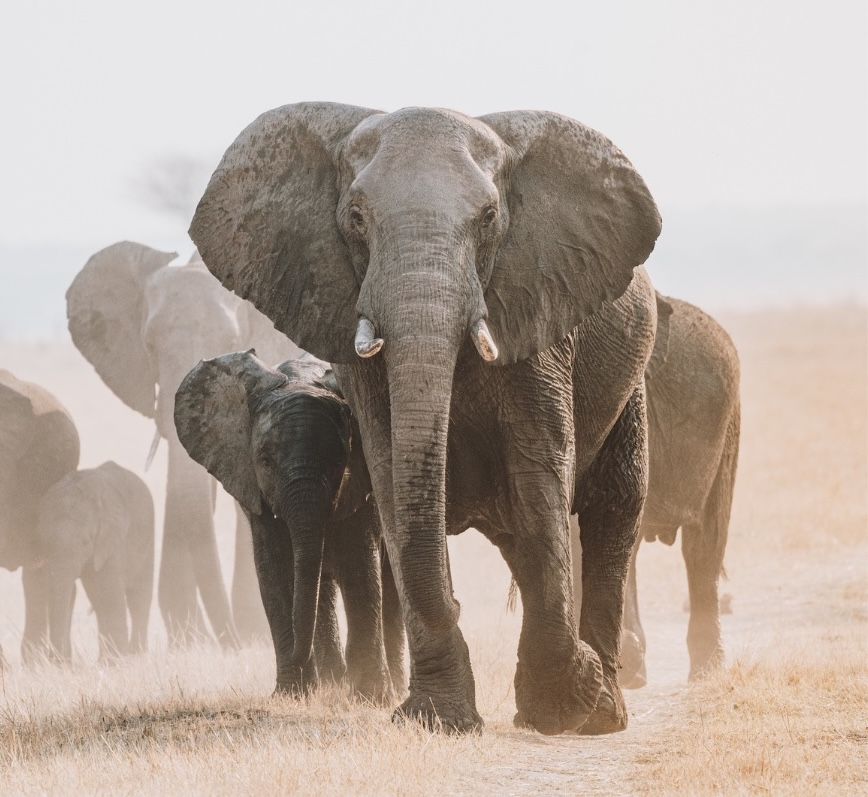
elephants Uganda

Health and practical essentials

Malaria prevention
Uganda is a malaria zone. Speak to your doctor or a travel health clinic before you travel about the right prophylaxis for you, and combine it with insect repellent, particularly in the evenings.

Yellow fever vaccination
This is required for entry into Uganda. Make sure you have your vaccination certificate to hand as it may be checked at the border.

Insect repellent
DEET-based repellent is the most effective. Apply it to exposed skin in the evenings and before forest treks. Tsetse flies can also be a consideration in certain parts of Queen Elizabeth National Park, which gives another reason to cover up.

Sunscreen
Uganda straddles the equator. The sun is strong, particularly on open game drives, and SPF 50 is not an overreaction.

A headtorch
Useful for early morning starts and camp evenings. Most lodges provide power, but it’s not always reliable, and there’s nothing more frustrating than fumbling for your camera gear in a dark tent.

A small day pack
Separate from your camera bag, a lightweight day pack is useful for carrying water, snacks, and your rain jacket on the gorilla trek. You’ll want to keep your camera bag as streamlined as possible on the hike.

Cash
The Ugandan Shilling is the local currency, and while most lodges accept cards, ATMs in smaller towns can be unreliable. It’s worth carrying some US dollars (post-2006 bills are generally preferred) to exchange on arrival or use directly in some places.

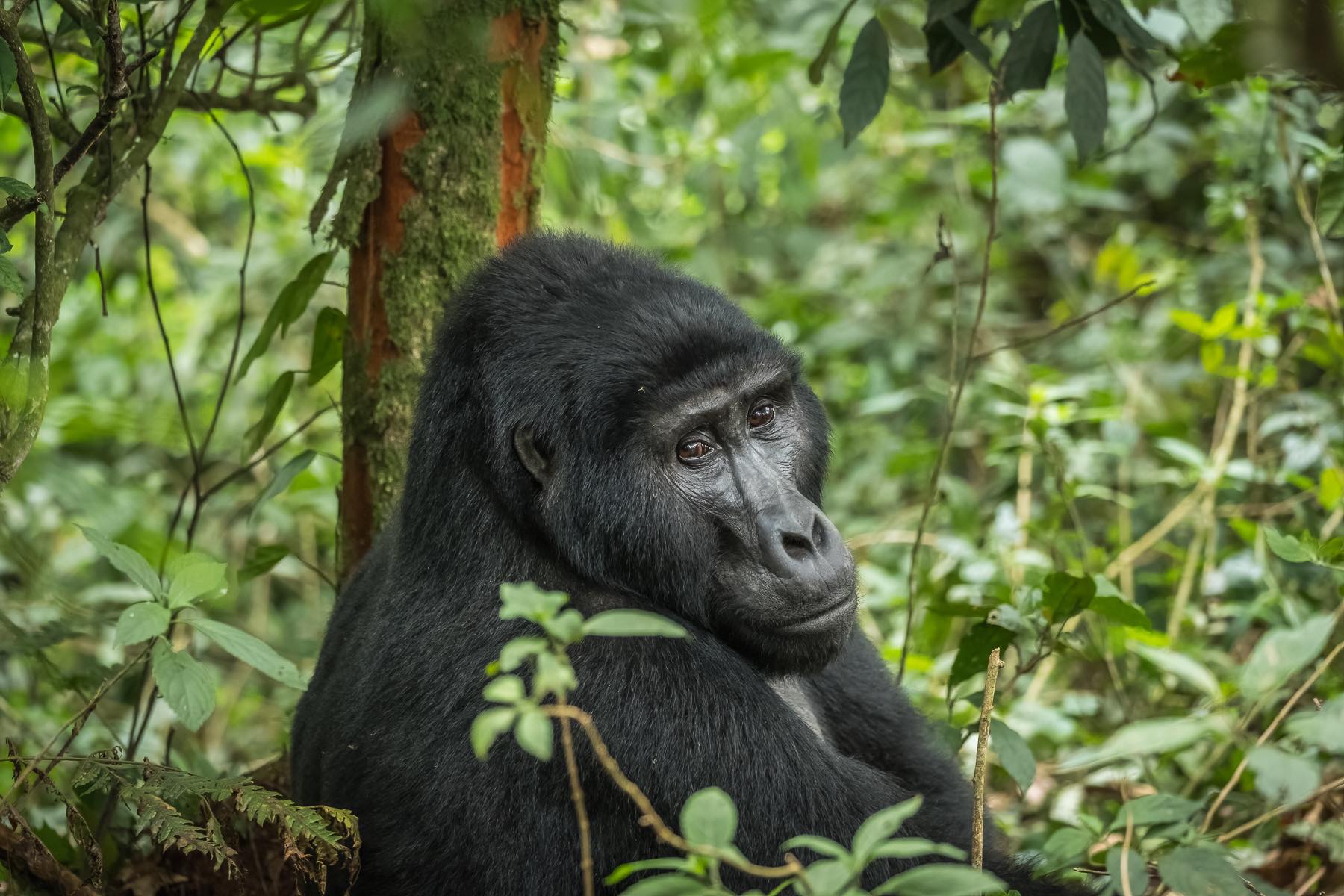
a gorilla sitting under the tree

A few things worth noting

Consider hiring a porters
You can hire a porter for the gorilla trek, and most people are very glad they did. They’ll carry your day pack and help you navigate the trickier sections of trail, which frees up your hands for the camera when it matters most. It’s also a meaningful source of income for local communities. If you think you might need this, let us know in advance.

Bring patience!
Not something you pack, but worth mentioning. Gorilla photography in particular demands it. You have one hour with the group, the light is often difficult, and the gorillas don’t pose. The photographers who come away with the best images are usually those who stay calm, work with what they’re given, and don’t spend the hour trying to force shots that aren’t there. For more on technique, our mountain gorilla photography tips are worth reading before you go, as is our guide to chimpanzee photography.

Ready to go?

Our Uganda photo safari takes you to Bwindi for mountain gorillas, Kibale for chimpanzees, and Queen Elizabeth National Park for a classic African safari experience, all in one trip. And needless to say, you’ll be guided by a seasoned professional photographer so that you can hone your skills along the way. If you have any questions about what to bring or how to prepare, or if you’d like to enquire about availability, get in touch. We’re happy to help.

Other recent posts

Close Menu

TOURS

VOLUNTEERING

DESTINATIONS

PHOTOGRAPHY FOCUS

ABOUT US

BLOG

PHOTO COMPETITION

ENQUIRE

BACK

PHOTOGRAPHY FOCUS