18 August 2025 - Using Photography for Good

Introducing Ibali: Nonprofit Photography Workshops in South Africa

South Africa is a place of striking contrast — a country shaped by vibrant cultures, breathtaking landscapes, deep resilience, and a long history of injustice and inequality. For many young people growing up in under-resourced communities, daily life is defined by social and economic challenges that limit their choices, stifle creativity, and make it hard to see a future beyond the immediate present.

But even in these challenging environments, there is incredible potential — untapped talent, powerful voices, and important stories waiting to be told. The Ibali Photo Collective was born out of this belief: that every young person has a story worth telling, and that photography can be a transformative tool for empowerment, self-expression, and social change.

Group of people in a library holding books and smiling at the camera

What is Ibali?

“Ibali” means story in Xhosa — and at its heart, that’s what this project is all about: stories. Not just the stories we tell with images, but the stories young people tell about themselves, their identity, their environment, and their place in the world.

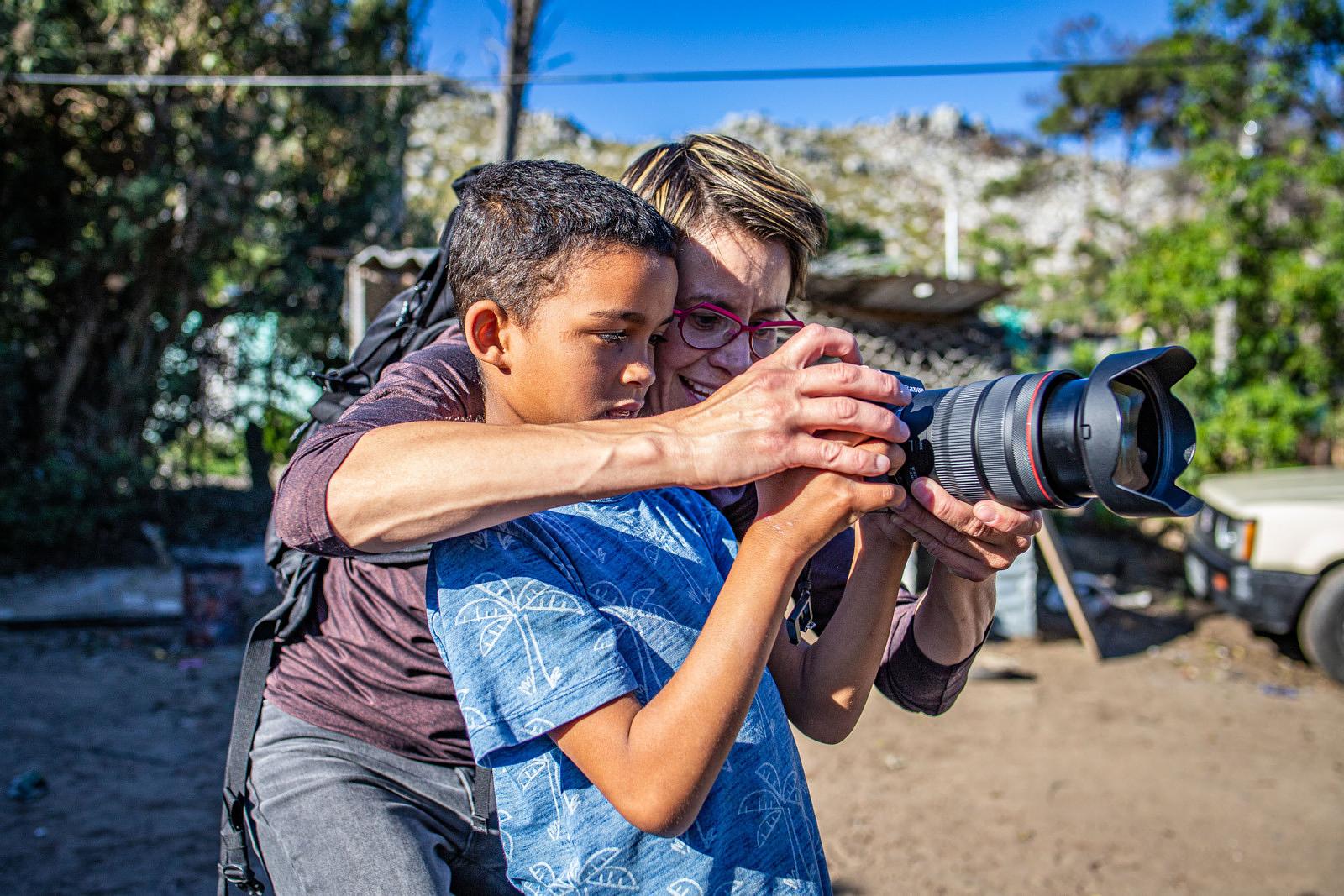
Led by Cape Town-based social documentary photographer Dave Fisher, Ibali is a 10-week photography workshop that offers youth from under-resourced areas the opportunity to learn technical photography skills, receive personal mentorship, and explore self-expression through visual storytelling. “The Ibali project means a lot to me personally because it’s a program that ran for a few years and then had to be closed down because of the COVID-19 pandemic,” Dave reflects. “I’ve been so excited to see it start up again this year.”

Originally conceived while Dave was working in a local high school, the idea came from recognizing photography’s unique ability to help young people connect with their surroundings and themselves. “I saw the potential for photography to be used as a way for young people to explore the world around them and then to use that as a platform to engage with a better understanding of themselves and the communities they come from.”

Three people sitting on concrete steps smiling as a photographer takes their picture

Why Photography?

Photography is accessible, immediate, and powerful. It doesn’t require perfect grammar or formal training — just a willingness to see, reflect, and share. For youth who may not see themselves reflected in mainstream media, who have rarely been asked to speak about their lives, or who struggle to imagine a different future, the act of capturing their world through a lens can be incredibly liberating.

“I really believe that photography has the ability to capture a story in a way that other mediums don’t,” Dave says. “The process of taking somebody’s photograph is a way of showing them that you’re interested in them and their lives… it allows them to be witnessed, to be seen, to be acknowledged, and be heard.”

Where It’s Happening

Ibali is currently running in Cape Town’s Ocean View community — an area marked by a complex mix of cultural richness and social struggle. Shaped by apartheid-era spatial planning, Ocean View today continues to face high rates of poverty, unemployment, crime, and under-resourced schools. But residents are keen to show a different side of their community.

“Just yesterday, some of us were walking through the community of Ocean View practicing some of the photography skills we’ve been learning,” Dave shares. “We had the opportunity to talk to a group of young men who were curious about what we were doing. They asked us to take some portrait photos of them, and that created a space for them to share about themselves. They really wanted to show outsiders a different perspective on their community, something other than the negative stereotypes.”

This moment, he says, encapsulates what Ibali is really about: using photography to document and share the stories that often go unheard.


Two men sitting outside on steps, engaged in conversation.

How It Works

Ibali unfolds in three phases over the course of 10 weeks:

1. Photography Foundations & Mentorship
Participants begin with the basics: camera operation, exposure, composition, light, and storytelling. Each week blends practical skills with hands-on practice and space for mentorship.

2. Reflection, Identity & Storytelling
Students start to turn their lens inward — asking deeper questions about identity, home, challenges, and dreams. Guided feedback sessions help shape these ideas into meaningful visual narratives.

3. Showcasing the Work & Creating Impact
At the end of the program, participants share their work through exhibitions, online platforms, and community events — not just gaining confidence in their creative abilities, but also raising awareness of local issues through their unique lens.

What’s Happening So Far

The current group of participants has already shown remarkable dedication. “I’ve been really moved by how invested each participant has been in the program and how eager they are to participate in every session, regardless of what topic we’re working on,” Dave says. “They really put in such an effort and always walk away having learned something different or tried something new. They’re not scared to get involved and just try their best.”

Photographers capturing street workers, with a child in front

Looking Ahead

The journey doesn’t end with one workshop. Dave’s aim is for Ibali to be a launching pad — not only for creative expression but for personal growth and even career pathways. “My hope is that the young people coming through the Ibali program find a space that allows them to express themselves creatively, explore new parts of their own identity, and use the camera as a tool to better understand their community,” he shares. “If they wish to continue to grow in that space, I hope this program provides a stepping stone into a career in photography.”

Join the Journey

We’ll be excited to follow the Ibali participants as they grow in skill and confidence, introduce their communities through their own lens, and learn the power of being both storyteller and subject. We’ll also introduce young photographers, hear about their experiences, see their work, and walk with them as they turn ordinary moments into powerful stories.

Inspired by this approach?

If you’re interested in using photography for social impact and storytelling, our Humanitarian Photography Workshop in Cape Town offers a unique opportunity to engage with similar themes. While separate from the Ibali project, this immersive experience focuses on ethical storytelling, working with local NGOs, and capturing meaningful narratives in communities across Cape Town.

Other recent posts

Close Menu

TOURS

VOLUNTEERING

DESTINATIONS

PHOTOGRAPHY FOCUS

ABOUT US

BLOG

PHOTO COMPETITION

ENQUIRE

BACK

PHOTOGRAPHY FOCUS